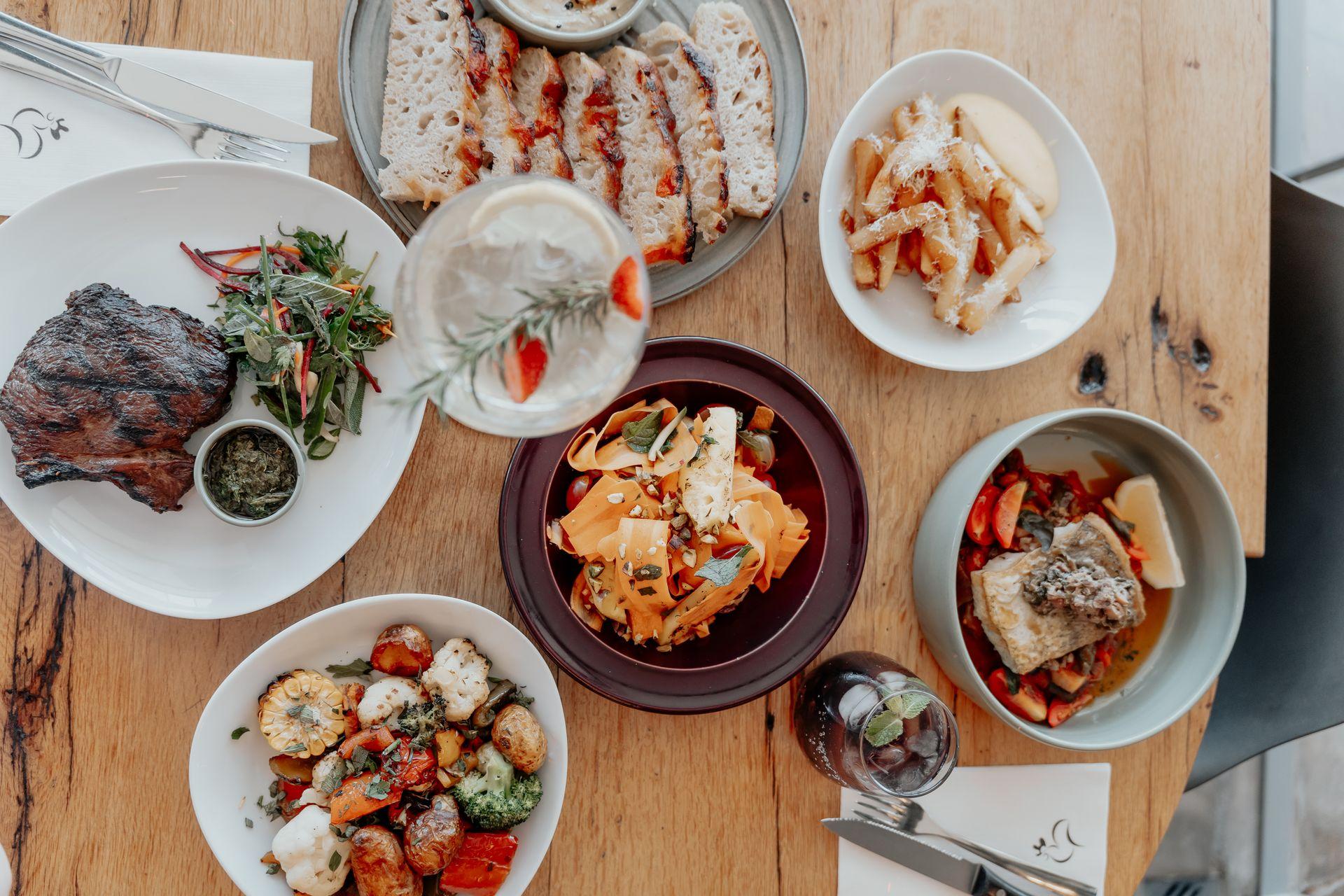
South African attractions have a reasonable case for taking food more seriously. In a country with strong agricultural produce, a service-oriented workforce, and visitors increasingly seeking grounded, place-based experiences, gastronomy is no longer just an operational necessity, it should be a deliberate part of the offer. Attractions that approach it strategically tend to see benefits in visitor satisfaction, dwell time, and secondary revenue.
Food is an experience, not a footnote
There is a tendency to treat food as the interval between activities. One of the main reasons people leave home is to engage their senses in ways that screens and remote connectivity cannot provide – to smell, taste, touch, hear and see things in a physical setting. Food is a direct and emotionally resonant way to deliver on that.
Attractions are social spaces, and among the few contexts where people of different ages actively choose to be together in a physical space, away from the mediation of screens. Sharing a food experience, whether an olive oil tasting at an estate or a warm vetkoek at a nature reserve, activates a particular kind of connection between people. As places designed for play, curiosity, and shared experience, this can be extended to the food and beverage offering on site. A considered gastronomy offering supports your core attraction offering.
“The table can be an extension of the attraction itself – not the break between activities, but a meaningful experience in its own right.”
South Africa’s position on the plate
South Africa has some genuine advantages here. Our agricultural sector produces regional, seasonal produce of good quality. Our service economy has people who are available, engaged, and knowledgeable about local context, a combination that is becoming harder to find as staffing constraints have pushed operators toward self-service and automation in the Global North.
When a visitor at a game reserve in Limpopo is served by someone who grew up nearby and can speak to the land, the seasons, and the food on the plate, that interaction adds a layer that a self service station or vending machine cannot. Agritourism operations have particular reason to consider this: citrus estates, tomato farms, perlemoen farms, rooibos producers, each has the raw material for a food offering that is directly tied to what happens on site. That specificity is difficult to replicate elsewhere, which is part of its value.
The revenue case is worth making
Gastronomy is also a financially meaningful secondary income stream. Research on attractions in the global North shows food and beverage revenue typically accounts for between 10% and 40% of total income, and in some cases represents the margin that keeps a site profitable. Attractions invest considerable time and budget drawing visitors through the door, and there is merit in capturing secondary spend from every visitor on site.
The relationship between dwell time and food spend is fairly direct: sites with four or more hours of engagement should be designing for a meal occasion. Shorter-stay attractions still have an audience that is likely to be hungry and thirsty, and a well-priced signature snack or drink can convert that reliably. Creating something specific to your site, a drink named for your region, a dish built from produce grown on your land, tends to command a modest premium and gives visitors something to talk about. Add venue hire for private occasions, and gastronomy starts to function as a revenue line in its own right rather than a cost centre.
Staying relevant as visitor preferences shift
Visitor food preferences are not fixed. The rise of weight-loss medications has measurably shifted dining behaviour in a number of markets: smaller portions are being ordered more frequently, and the traditional three-course format is less relevant than it was. Alcohol-free occasions are also growing. Driven by sober-curious choices, religious observance, and designated driving there is room for attractions to offer more interesting premium non-alcoholic options than is currently common.
Farm-to-table menus, where produce provenance is visible and explained, continue to connect with both domestic and international visitors. Small moments of theatre such as a braai experience, fire-baked bread, a make-your-own chutney station tend to be memorable precisely because they tie the food to the place. The underlying principle is to align what you offer with who is actually visiting your site: their expectations, their budget, and the story your attraction already tells. When the food reflects that, it stops being catering and becomes part of the experience itself.
Gastronomy and attractions do not always develop in the same order. There are well-documented cases where the food offering came first and the broader visitor experience was built around it – the wine farms of the Western Cape being an obvious local example. I often ask myself other agritourism sites have not followed a similar path, and equally, why many wine farms have been content to stop at the tasting room rather than expanding into a fuller attraction offering. South Africa has the produce, the people, and the landscapes to support this. The opportunity is not complicated. It simply requires attraction operators and food producers to see themselves as being in the same business: creating reasons for people to show up, stay longer, and come back.
Submitted by Sabine Lehmann
Founder of Curiositas, and Interim Chairperson and President of AAVEA

No responses yet