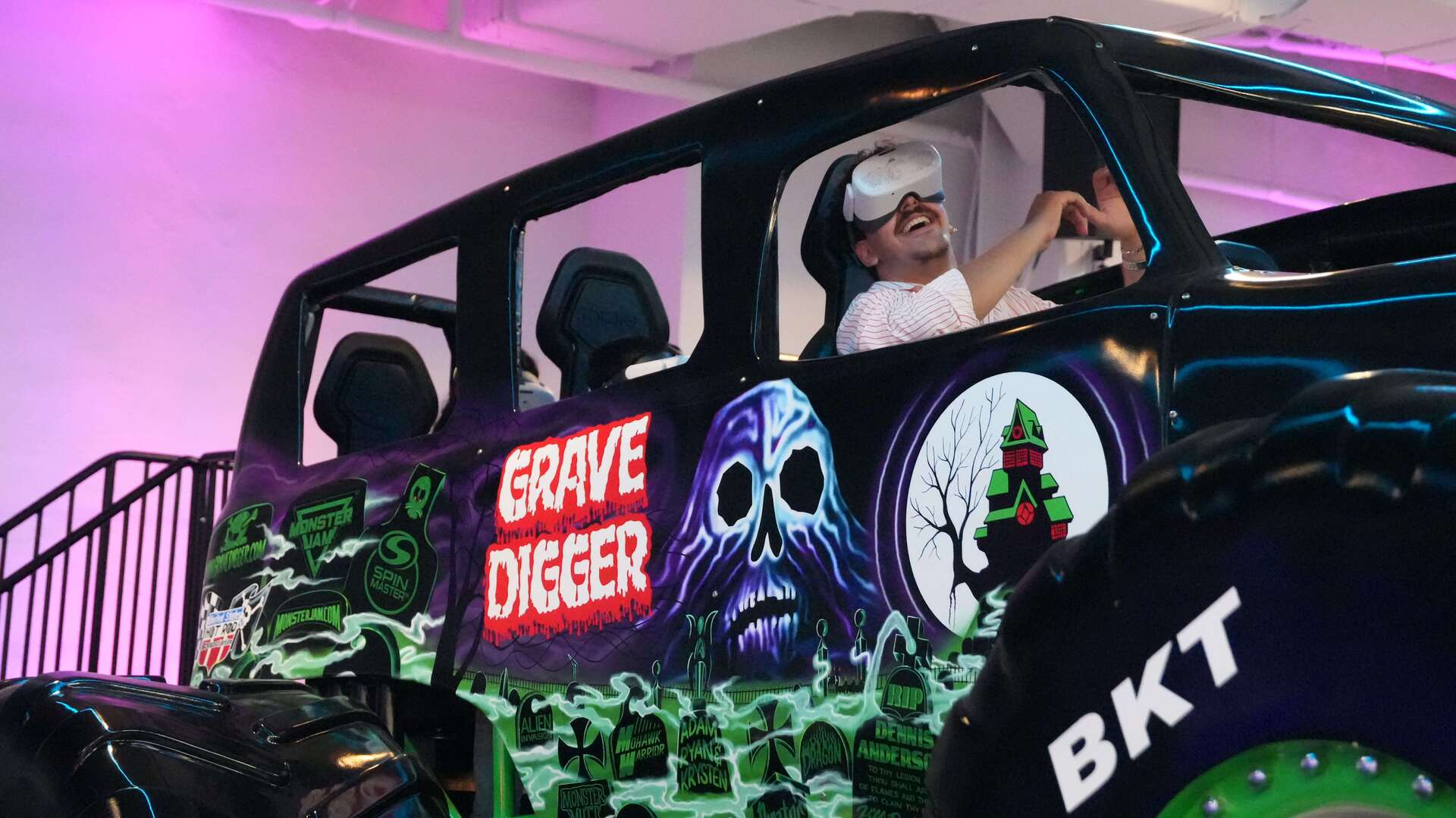
Our July Live Chat delivered a substantive session on one of the most important conversations in the attractions industry today. DOF Robotics, an AAVEA and IAAPA member specialising in VR, AR, motion simulation, and immersive attraction design, presented a rigorous examination of edutainment – what it truly means, what the evidence says about how learning works, and what the implications are for attractions across Africa and beyond.
Beyond Entertainment – The Case for Edutainment
Visitor expectations have shifted considerably, with audiences increasingly seeking experiences that offer more than passive entertainment. Edutainment has emerged as the industry’s response to this shift, though it is frequently misunderstood. The session was clear: edutainment is not a diluted version of either education or entertainment. It is the intentional design of experiences that achieve both simultaneously, and when executed with purpose, each dimension strengthens the other. Viewed through a systems engineering lens, every great attraction functions as a closed-loop learning system – prior knowledge as input, story-led sensory experience as the encounter, personal reflection as meaning-making, and behavioural change as the measurable output.
Why So Many Educational Attractions Fall Short
Despite genuine ambition across the sector, many educational attractions do not deliver on their learning potential. The most common failure mode is optimising for information transfer rather than genuine learning. Filling galleries with facts does not produce retention – it produces fatigue.
Drawing on cognitive science and educational psychology, the session outlined four variables that determine whether learning actually occurs. Attention must be captured before anything else is possible. Emotional engagement is the most powerful memory consolidation mechanism available – visitors who feel nothing retain nothing. Active participation significantly increases recall compared to passive observation. And spaced repetition across multiple touchpoints moves content from short-term to long-term memory. The implication is clear: technology deployed without addressing these variables will not improve learning outcomes. It will only make failure more costly.
Technology in Its Proper Place
Technology featured prominently, but the framing was measured. Technology is not the destination — it is the vehicle, and its value lies entirely in how purposefully it is deployed. VR and AR transport visitors to otherwise inaccessible places and moments. Projection mapping transforms static environments into dynamic, narrative-driven spaces. Motion simulation creates sensory memory anchors that amplify emotional engagement. AI-driven personalisation tailors content to individual visitor profiles. Each tool has a legitimate role, but none delivers meaningful outcomes without a clear educational purpose at its foundation. The experience must lead. The technology must serve.
The Enduring Power of Storytelling
The session made a compelling case for storytelling as one of the most powerful and underutilised tools available to attraction designers. Research suggests that information embedded within narrative is recalled up to 22 times more effectively than standalone facts. Narrative-driven gallery design has been associated with meaningful increases in dwell time, heritage sites centred on personal testimony create deeper visitor engagement, and story-led immersive experiences consistently record the highest revisit intent scores in the industry. For African attractions, this opportunity is particularly significant. The continent possesses a rich reservoir of history, oral tradition, indigenous knowledge, and cultural narrative that represents a genuine competitive advantage – one that no internationally imported concept can replicate.
Africa’s Moment
Rather than characterising Africa as a developing market in pursuit of international benchmarks, the session argued the opposite. The continent is not burdened by legacy infrastructure, ageing content models, or institutional inertia. With approximately 60% of the population under 25, a tourism sector projected to double by 2035, and an extraordinary depth of cultural and heritage assets, Africa is well positioned to design the next generation of attractions from first principles. The recommendation was to build intentionally on existing foundations – evolving museums into interactive learning environments, integrating locally relevant STEM programming into science centres, and activating heritage sites through augmented reality and immersive interpretation – with African creative and technical talent at the centre of it all.
Measuring What Matters
Attractions optimise for what they measure. If throughput and revenue remain the primary metrics, design decisions will reflect those priorities alone. The transition to edutainment requires a parallel shift in how performance is defined – from visitors per hour to participation rates, from occupancy to dwell time per experience zone, and from learning being unmeasured entirely to knowledge retention and behavioural change becoming core indicators of success. Adopting edutainment KPIs is an organisational signal that learning is a core product, not an ancillary benefit.
AAVEA Live takes place every third Thursday of the month at 2pm, free and open to all. If this recap prompts you to join us next time, that is exactly the point.

No responses yet